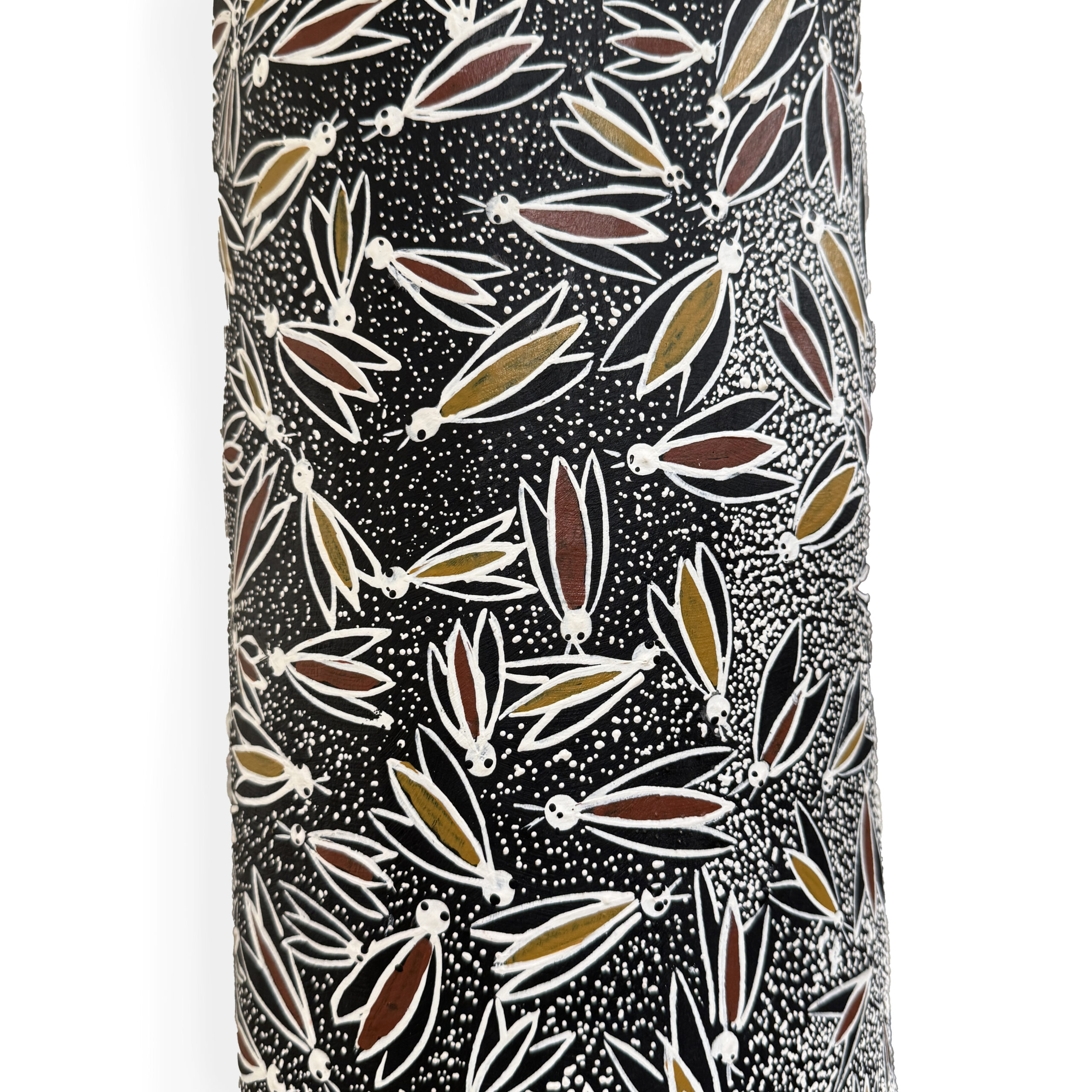
Gurka’wuy
$7,500.00
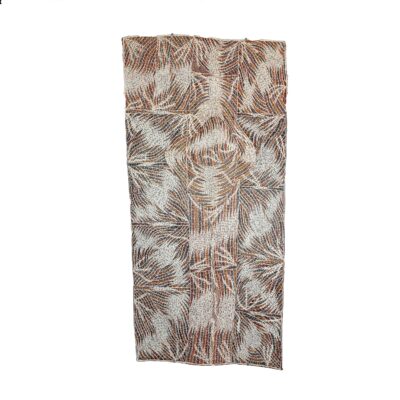
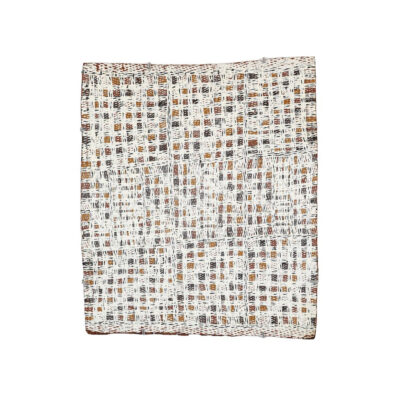
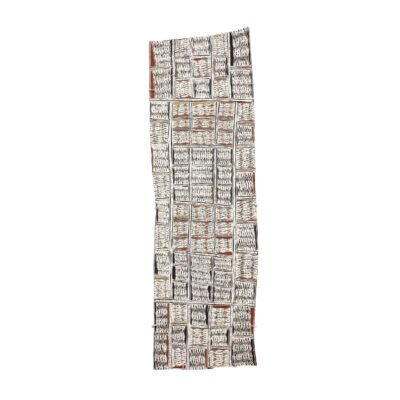
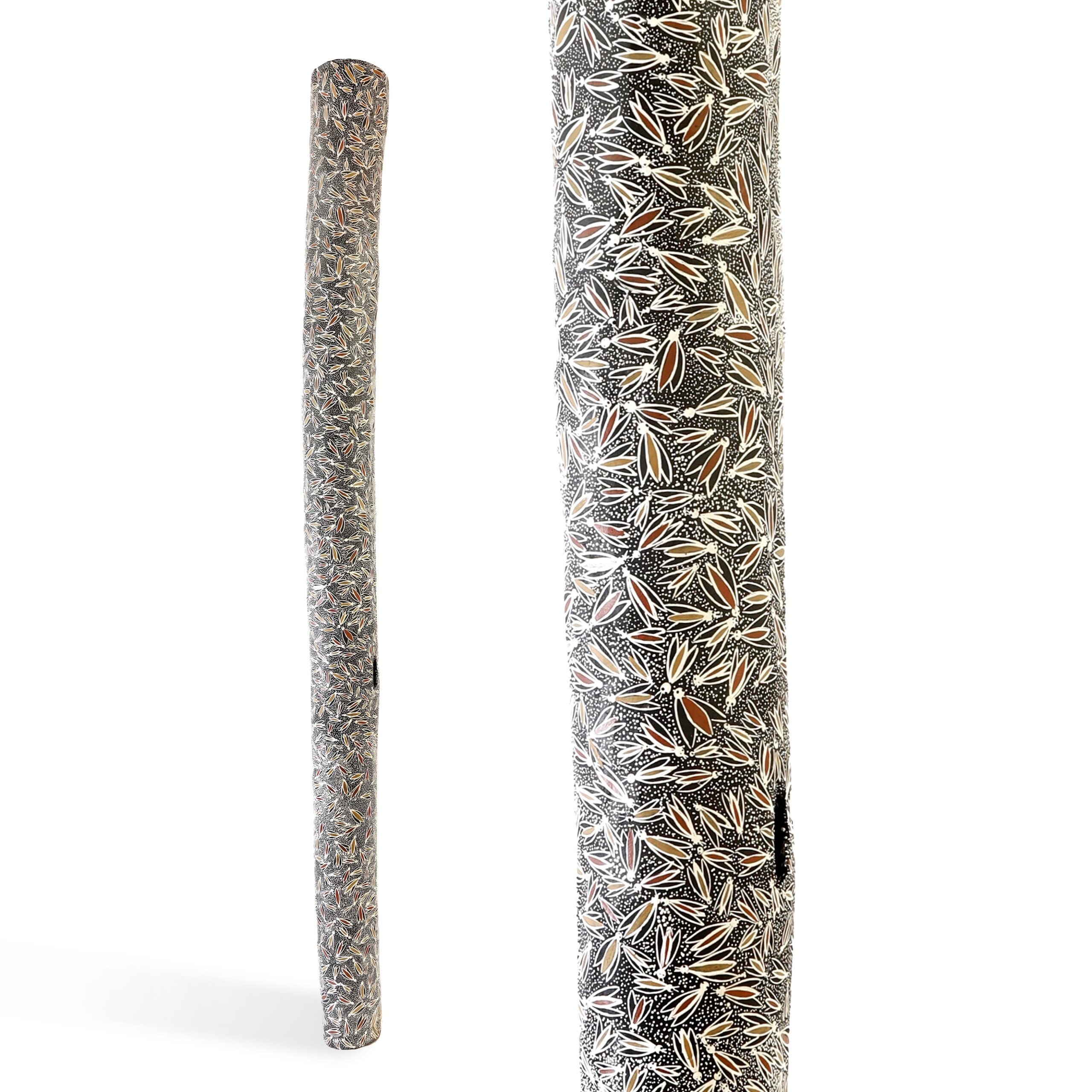
This painting is about Wuyal, the ancestral sugarbag man, an important ancestor of the Marrakulu clan of northeast Arnhem Land. This painting symbolizes his journey during which he named important sites and certain animals. The story refers also to the continuation of the Marrakulu culture in dance, song and ceremony, which are performed by current generations who have inherited this knowledge and culture from ancestral figures such as Wuyal. This story refers also to important Dhuwa moiety ancestors called the Wawilak sisters.
Wuyal was the first man to look for any homeland for the Marrakulu people. He began a journey from Gurka’wuy traveling via Yuḏuyuḏu to Cape Shield, up to Trial Bay and along the course of the Goyder River until he came to Nhulun, or Mt. Saunders. Traveling along with Wuyal, was Ganyt’jalala. These men are symbolic of the Märi-Guthara (grandparent-grandchild) relationship which describes the relationship between Ḏäṯiwuy and Marrakulu clans.
Wuyal carried with him tools for hunting animals and for collecting wild honey or sugarbag. The dilly bag, Banduk, worn around his neck, was used to carry the sugarbag called guku. Wuyal used a stone axe, djalpaṯ, to cut down trees in his search for sugarbag. He also carried a stone headed spear for hunting rock wallabies, Ḏulaku. The stone head of the spear, Guyarra, is made from stone found at a place called Nilipitji. The shaft of the spear is called guṉḏit. Also carried was gaḻpu, a spearthrower.
In their ancestral travels these men traveled alone without wives and conducted what was mens’ business in ceremony. Wuyal’s ceremonial ground where he danced and conducted sacred ceremony, a place near Buffalo Creek and Mt. Saunders, is called Wandjipuy.
The tools were also used in shaping the land. Trees cut down by Wuyal in the search for sugarbag, turned into rivers. The Gurka’wuy river was made in this way. Wuyal also named places by throwing his boomerang, Gunyalili, and giving names to the places where it fell to the ground. From Mt. Saunders he threw his Gunyalili and named a place called Gäluru in this way.
Gurka’wuy River flows out through Trial Bay, conflicting and clashing in a turbulent unity with the incoming tidal waters from the deep ocean. The names of the rocks here, rarely spoken, are Dundiwuy, Bamurrungu and Yilpirr.
Yolŋu of this area speak of a hole submerged under the rocks, from where bubbles are seen rising to the surface, sometimes bursting forth with a rush. The bubbles are seen as a life force and a direct Ancestral connection for the Marrakulu. In sacred song, Bamurruŋu, a sacred and monolithic rock in the mouth of Trial Bay lies submerged within its waters surrounded by these fish; Buku-Duŋgulmirri or Wawurritjpal, Sea Mullet.
When the Marrakulu perform ritual dance for the events depicted in this painting participants move towards a held spear representing the steadfastness of the rock, splitting the dancers who then surround the rock known as Bamurruŋu moving as does the sea to song and rhythm of yidaki and bilma. Bamurruŋu is a spiritual focus for an alliance of clans who share identity connected with the felling of the Stringybark tree.
Wuyal the Ancestral Sugarbag Man while in Marrakulu clan country cut the sacred Wanambi (hollowed Stringybark tree) looking for native honey. Its falling path gouged the course for the Gurka’wuy River that has flowed ever since into Trial Bay. The hollow log’s movements in and out with the tides and currents completing the kinship connections of the various waters are the subject of ritual song and dance of this country.
The Marrakulu sing these events (with other clans) during ceremony associated with the Wawalak myth. In other clan’s lands these actions were repeated. These groups dance songs of honey flowing like rivers of freshwater from fonts deep in the saltwater under the rock. The rivers belonging to these clans; the Marrakulu, Golumala, Marraŋu and Wawilak flow (spiritually) towards this rock. This Balamumu oceanic salt water rushing into the bay creates eddies, currents and patterns that delineate the relationship between the Djapu and Marrakulu clans. This relationship is again referred to as Märi-Gutharra. The maternal grandmother clan and its granddaughter. These waters are in this relationship as well. This is known as the ‘backbone’. One of the key relationships in a complex kinship system whose reciprocal duties are most powerful. These clans are both Dhuwa and share responsibilities for circumcising and burying each others clan members. A matriarchal analysis of the world that governs the behaviour of both sexes equally.
Here the artist has shown native bees. These bees are the creators of the honey from these flowers. The continuum between the environment, the art and the sacred foundation of the Marrakulu is completed when the Marrakulu dance as bees in their ceremony elbows extended, hands clutching stringybark leaves which vibrate as wings.
Available
Price includes shipping within Australia, please contact us for international shipping.